Online marketing software refers to digital tools that help individuals and businesses promote products or services online, manage leads, communicate with customers, and track performance.
These tools are widely used by bloggers, affiliate marketers, small businesses, and online entrepreneurs to simplify and automate marketing tasks that would otherwise require multiple platforms
How Online Marketing Software Helps Businesses Grow
Online marketing software helps businesses generate leads, automate follow-ups,track performance, and improve conversions without manual effort.
What Is Online Marketing Software?
Online marketing software is a broad term that includes tools designed to support activities such as:
- Lead generation
- Email marketing
- Sales funnel creation
- Customer relationship management
- Analytics and performance tracking
Instead of handling everything manually, marketers use software to save time, reduce errors, and scale results.
How these Marketing Softwares Works for Beginners
Most online marketing tools work by combining multiple functions into a single dashboard.
Here’s a simple breakdown of how they typically operate:
- Traffic Capture
Software helps create landing pages or forms that collect visitor information such as email addresses. - Communication & Follow-Up
Once a lead is captured, automated emails or messages can be sent based on user actions. - Conversion Process
Funnels or sales pages guide users toward a purchase or desired action. - Tracking & Optimization
Built-in analytics track clicks, conversions, and engagement so campaigns can be improved.
Key Features to Look for in Online Marketing Software
Not all online marketing software offers the same capabilities. Choosing the right platform depends on your business goals, technical skills, and budget.
Most effective marketing software includes tools for email automation, lead management, analytics, and customer segmentation. These features help businesses communicate consistently and track performance across multiple channels.
Advanced platforms may also include CRM integration, landing page builders, and workflow automation. For beginners, ease of use and reliable customer support are often more important than having every feature available.
Online marketing software continues to evolve as businesses adopt digital-first strategies. Tools that combine automation, analytics, and customer engagement help teams work more efficiently while maintaining consistent communication across channels.
Types of Marketing Softwares
There are several common types of online marketing software, including:
Email Marketing Tools
Used to send newsletters, promotions, and automated follow-ups to subscribers.
Funnel Builders
Help create structured sales paths that guide visitors step by step.
Analytics Tools
Track website traffic, user behavior, and conversion data.
Automation Platforms
Trigger actions based on user behavior, such as sending emails or tagging contacts.
Related Guides on Online Marketing Software
Online marketing softwares for beginners. If you are just getting started, this beginner-friendly guide explains how online marketing software works and how to use it without technical experience.
Types of online marketing softwares explained. Different tools serve different purposes. This guide breaks down the main types of online marketing software and how businesses use each category.
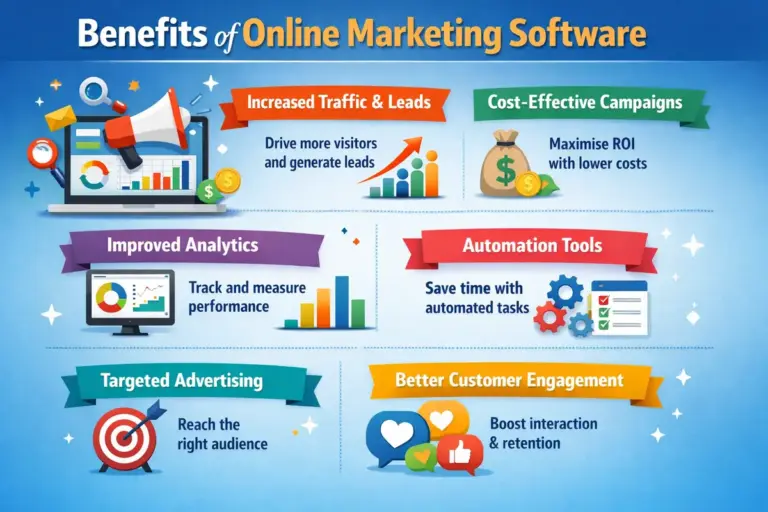
Benefits of online market softwares for businesses. Businesses adopt marketing software to improve efficiency, automation, and decision-making. This guide explains the key benefits in detail.
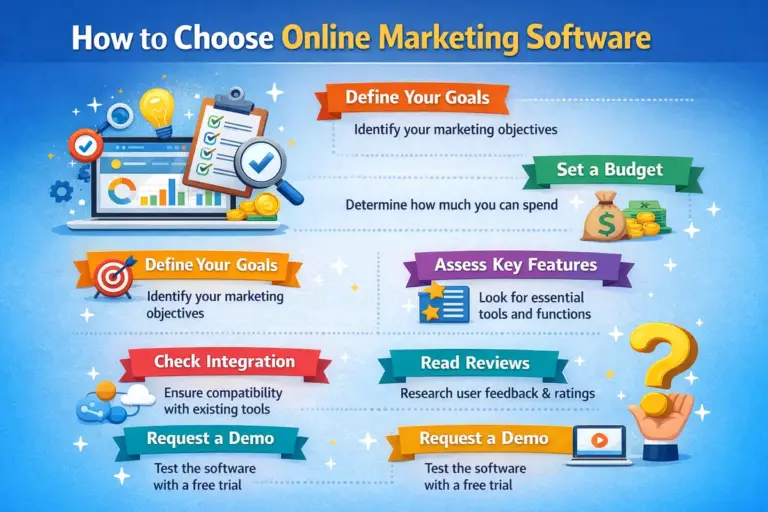
How to choose the right marketing software. Choosing the right platform depends on goals, budget, and features. This practical guide explains how to evaluate and select the best option.
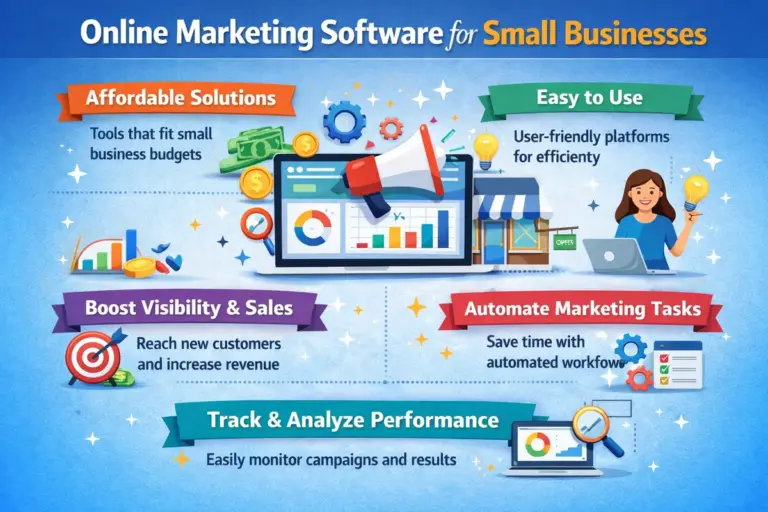
Online Marketing Software for Small Businesses small businesses have unique needs and constraints. This guide explains which online marketing software works best for small teams and limited budgets.
Why Businesses Use Marketing Softwares
Online marketing software is popular because it allows users to:
- Reach a larger audience
- Automate repetitive tasks
- Improve conversion rates
- Manage campaigns from one place
- Reduce marketing costs
For beginners, these tools also reduce the technical complexity of online marketing.
Is Online Marketing Software Worth Using?
For most businesses and marketers, online marketing software is worth using because it provides structure, consistency, and scalability.
However, the effectiveness of any tool depends on:
- How well it is implemented
- Whether it matches the user’s goals
- The quality of the marketing strategy behind it
Software supports marketing efforts — it does not replace strategy or effort.
Common Examples of Digital Marketing Softwares
To better understand online marketing software, it helps to look at common examples of how these tools are used in real-world scenarios.
Some platforms focus primarily on email marketing, allowing businesses to send newsletters, promotional messages, and automated follow-ups. Others specialize in sales funnels, helping users guide visitors through a structured buying process.
There are also tools designed for analytics and tracking, which help marketers understand where traffic comes from, how users behave on a website, and which campaigns perform best. Many modern platforms combine several of these functions into one system to simplify marketing workflows.
According to HubSpot, online marketing automation tools help businesses automate lead generation, customer communication, and performance tracking.
Online Marketing Softwares vs Manual Marketing
Before using online marketing software, many businesses rely on manual methods such as spreadsheets, individual email tools, or basic websites. While manual marketing can work on a small scale, it quickly becomes inefficient as traffic and customer numbers grow.
Online marketing software helps by:
- Automating repetitive tasks
- Reducing human errors
- Providing consistent follow-up
- Centralizing data and reporting
This makes it easier to manage marketing activities without increasing workload significantly. Many businesses use online marketing software alongside top marketing tools to improve conversions.
Types of Online Marketing Software
Online marketing software comes in several categories, including email marketing tools, CRM platforms, analytics software, and all-in-one marketing suites.

Key Factors to Consider Before Choosing Marketing Softwares
Not all online marketing software is the same. Before choosing a tool, it’s important to consider several factors.
Ease of Use
Beginners should look for software with a simple interface and clear documentation. Complex tools may offer advanced features but can slow down progress if they are difficult to use.
Pricing and Scalability
Some platforms offer free or low-cost plans, while others require higher monthly fees. It’s important to choose software that fits your budget and can scale as your needs grow.
Features and Integrations
Different tools focus on different features. Some prioritize email marketing, while others focus on funnels, automation, or analytics. Choosing software that aligns with your primary goals is essential.
Support and Updates
Reliable customer support and regular updates indicate that a platform is actively maintained and trustworthy.
Can Beginners Use Online Marketing Software Effectively?
Yes, beginners can use online marketing software effectively, provided they choose tools designed with simplicity in mind.
Many platforms offer tutorials, templates, and guided setup processes that help new users get started quickly. However, it’s important to remember that software alone does not guarantee results. Learning basic marketing concepts and applying them consistently is still necessary.
How Online Marketing Software Supports Customer Journey’s
Online marketing software plays an important role in managing the entire customer journey, from the first interaction to long-term retention. Instead of treating marketing as a single action, businesses can use software to guide users through structured steps.
At the awareness stage, marketing tools help attract visitors through email campaigns, landing pages, and targeted content. Once users show interest, automation workflows deliver relevant messages based on behavior, such as page visits or email opens.
During the decision stage, online marketing software supports lead nurturing by sending follow-ups, reminders, and personalized offers. This ensures potential customers receive timely information without manual effort.
After a purchase, the same software can be used for onboarding, feedback collection, and retention campaigns. This long-term approach improves customer satisfaction and increases lifetime value.
Role of Automation in Modern Online Marketing
Automation is one of the most valuable features of online marketing software. It allows businesses to execute complex marketing tasks with minimal manual input.
Automated workflows handle actions such as sending welcome emails, assigning leads, and triggering campaigns based on user behavior. This reduces errors and ensures consistency across marketing activities.
Automation also improves response time. Instead of waiting for manual actions, customers receive instant responses, which increases engagement and trust.
For growing businesses, automation makes scaling possible. Campaigns that work for ten customers can easily be expanded to reach thousands without additional workload.
Data and Analytics in Online Marketing Software
Data-driven decision-making is a core advantage of online marketing software. These tools collect and organize information about traffic, engagement, and conversions.
Dashboards provide visual insights that help businesses understand which campaigns perform well and which need improvement. Metrics such as click-through rates, conversion rates, and bounce rates guide optimization efforts.
Analytics also help identify audience preferences. Businesses can see which content resonates most and adjust messaging accordingly.
Over time, consistent analysis leads to better strategy planning and improved marketing performance.
Online Marketing Software and Lead Generation
Lead generation is a primary use case for online marketing software. Tools such as landing pages, forms, and pop-ups help capture user information efficiently.
Once leads are collected, software categorizes them based on behavior, interest level, or source. This segmentation allows targeted communication rather than generic messaging.
Automated follow-ups ensure leads are not forgotten. Timely emails and reminders keep prospects engaged until they are ready to convert.
Effective lead management reduces wasted opportunities and increases overall conversion rates.
Integration Capabilities and Ecosystem Support
Modern online marketing software rarely works in isolation. Integration with other tools is essential for seamless workflows.
Many platforms connect with CRM systems, payment processors, content management systems, and analytics tools. This allows data to flow smoothly between systems without manual transfer.
Integration reduces duplication of work and ensures accuracy. For example, customer data collected through marketing campaigns can automatically update sales or support systems.
Businesses should consider integration options when choosing marketing software to ensure long-term flexibility.
Security and Privacy Considerations
Security is an important factor when using online marketing software, especially when handling customer data. Reputable platforms implement encryption, access controls, and regular updates to protect information.
Privacy regulations also affect how marketing software is used. Businesses must ensure compliance with data protection laws and consent requirements.
Many tools include built-in features to manage subscriptions, opt-outs, and user permissions. These features help maintain trust and avoid legal issues.
Choosing secure and compliant software protects both businesses and customers.
Online Marketing Software Trends to Watch
Online marketing software continues to evolve as technology advances. Artificial intelligence and machine learning are increasingly used to improve targeting and personalization.
Predictive analytics help businesses anticipate customer behavior and optimize campaigns proactively. AI-powered recommendations enhance content relevance and engagement.
Another trend is the rise of no-code and low-code platforms. These tools allow non-technical users to build workflows and campaigns without coding knowledge.
As competition increases, tools that prioritize simplicity and performance will continue to gain popularity.
Common Mistakes Businesses Make When Using Online Marketing Software
One common mistake is using too many tools at once. Managing multiple platforms can lead to confusion and inefficiency.
Another mistake is neglecting proper setup. Without configuring automation rules and tracking correctly, software may not deliver expected results.
Some businesses also fail to analyze data regularly. Collecting data without acting on insights limits the value of marketing software.
Avoiding these mistakes helps businesses get maximum return on their investment.
Best Practices for Long-Term Success
To succeed with online marketing software, businesses should start with clear goals. Understanding what outcomes are expected helps select the right tools and features.
Regular testing and optimization improve campaign performance over time. Small adjustments based on data insights can lead to significant improvements.
Training team members is equally important. Well-trained users can leverage software capabilities more effectively.
Consistent evaluation ensures marketing efforts remain aligned with business objectives.
Online marketing software has become an essential component of modern digital strategies. It simplifies complex tasks, improves efficiency, and supports data-driven decisions.
While no single tool is perfect for every business, choosing software that aligns with goals and resources leads to better outcomes.
Businesses that invest time in setup, optimization, and learning can gain a strong competitive advantage through effective use of online marketing software.
Online marketing software also helps businesses maintain consistency in their branding and messaging. By centralizing campaigns, templates, and workflows, teams can ensure that customers receive a unified experience across different platforms. This consistency builds credibility and reinforces brand recognition over time. When marketing efforts are aligned and well-coordinated, businesses are more likely to earn trust, improve engagement, and achieve sustainable growth in competitive digital markets.
Complete Guides on Online Marketing Software
o help you explore every aspect of online marketing software in detail, below are in-depth guides covering different use cases, pricing, and decision-making scenarios. Each guide is designed to answer a specific question businesses commonly have when evaluating marketing tools.
- Online Marketing Software for Beginners – A beginner-friendly guide explaining how online marketing software works, key features to focus on, and how to get started without technical experience.
- Types of Online Marketing Software – A detailed breakdown of the main categories of online marketing software, including automation, analytics, email marketing, and customer engagement tools.
- Benefits of Online Marketing Software – An explanation of the core benefits businesses gain from using marketing software, such as improved efficiency, automation, better insights, and scalability.
- How to Choose Online Marketing Software – A practical decision-making guide that explains how to evaluate platforms based on business goals, budget, features, and long-term growth needs.
- Online Marketing Software for Small Businesses – A focused guide on the best online marketing software options for small businesses, considering limited budgets, small teams, and ease of use.
- Online Marketing Software Pricing Models – A complete explanation of common pricing models, including subscription plans, freemium tools, usage-based pricing, and hidden costs businesses should watch for.
- Online Marketing Software vs Marketing Agencies – A comparison that helps businesses decide whether using online marketing software or hiring a marketing agency is the better option based on cost, control, and scalability.
- Best Online Marketing Software for Businesses – A curated list of the best online marketing software platforms, comparing features, pricing, pros, and use cases to help businesses make informed decisions.
Frequently Asked Questions
What is marketing softwares used for?
Online marketing software is used to manage and automate digital marketing activities such as lead generation, email campaigns, sales funnels, analytics, and customer communication.
Is marketing software suitable for beginners?
Yes, many online marketing software tools are designed for beginners and offer simple interfaces, templates, and tutorials to help users get started without technical expertise.
Do small businesses need these marketing software?
Small businesses often benefit from online marketing software because it helps streamline marketing tasks, track performance, and reach customers more efficiently without hiring large teams.
Is it expensive?
Pricing varies by platform. Some tools offer free or low-cost plans, while others charge monthly fees based on features and usage. Beginners can often start with affordable options.
Can these softwares replace manual marketing?
Online marketing software does not replace marketing strategy, but it helps automate repetitive tasks and improve efficiency, allowing marketers to focus more on planning and content creation.
Final Thoughts
Online marketing software has become an essential part of modern digital marketing. These tools help individuals and businesses streamline their marketing efforts, improve efficiency, and scale operations over time.
By understanding what online marketing software is and how it works, beginners can make more informed decisions and choose solutions that align with their goals and experience level.
Future Outlook of Online Marketing Software
The future of online marketing software is closely tied to how businesses adapt to changing digital behavior. As customers interact with brands across more channels, software platforms are evolving to provide unified experiences rather than isolated tools.
One major direction is increased personalization. Marketing software is moving beyond basic segmentation toward real-time personalization based on user behavior, preferences, and intent. This allows businesses to deliver messages that feel relevant rather than generic, improving engagement and conversion rates.
Artificial intelligence is also becoming more integrated into marketing platforms. AI helps automate decision-making processes such as determining the best time to send emails, recommending content, or identifying high-quality leads. Over time, these systems learn from data and continuously improve campaign performance.
Another important trend is cross-channel integration. Online marketing software is increasingly designed to manage email, social media, paid ads, content marketing, and customer data from a single interface. This reduces fragmentation and gives businesses a clearer view of how each channel contributes to results.
Privacy and data transparency will continue to shape how marketing software operates. With stricter regulations and growing user awareness, platforms are focusing on consent management, ethical data usage, and clear reporting. Businesses that use compliant tools will be better positioned to build long-term trust with their audiences.
Scalability will remain a key factor for businesses of all sizes. As companies grow, their marketing needs become more complex. Software that can adapt without forcing costly migrations or steep learning curves will offer significant advantages.
Another area of development is collaboration features. Modern marketing teams often work remotely or across departments. Marketing software is increasingly adding tools that support collaboration, approval workflows, and shared reporting, making it easier for teams to work together efficiently.
Ease of use will also play a major role in future adoption. Platforms that balance advanced features with intuitive interfaces will appeal to a broader audience. Businesses are prioritizing tools that reduce dependency on technical specialists while still offering powerful capabilities.
Finally, online marketing software will continue to align more closely with business outcomes rather than vanity metrics. Instead of focusing only on clicks or opens, future tools will emphasize revenue impact, customer lifetime value, and retention metrics. This shift helps businesses make smarter decisions and justify marketing investments.
As digital competition increases, businesses that adopt flexible, data-driven marketing software will be better equipped to respond to change. Those that rely on outdated or disconnected tools may struggle to keep up with evolving customer expectations through online marketing software.
Disclaimer
This article is for informational purposes only and does not constitute professional or financial advice.
Learn more about how we create content in our Editorial Policy.