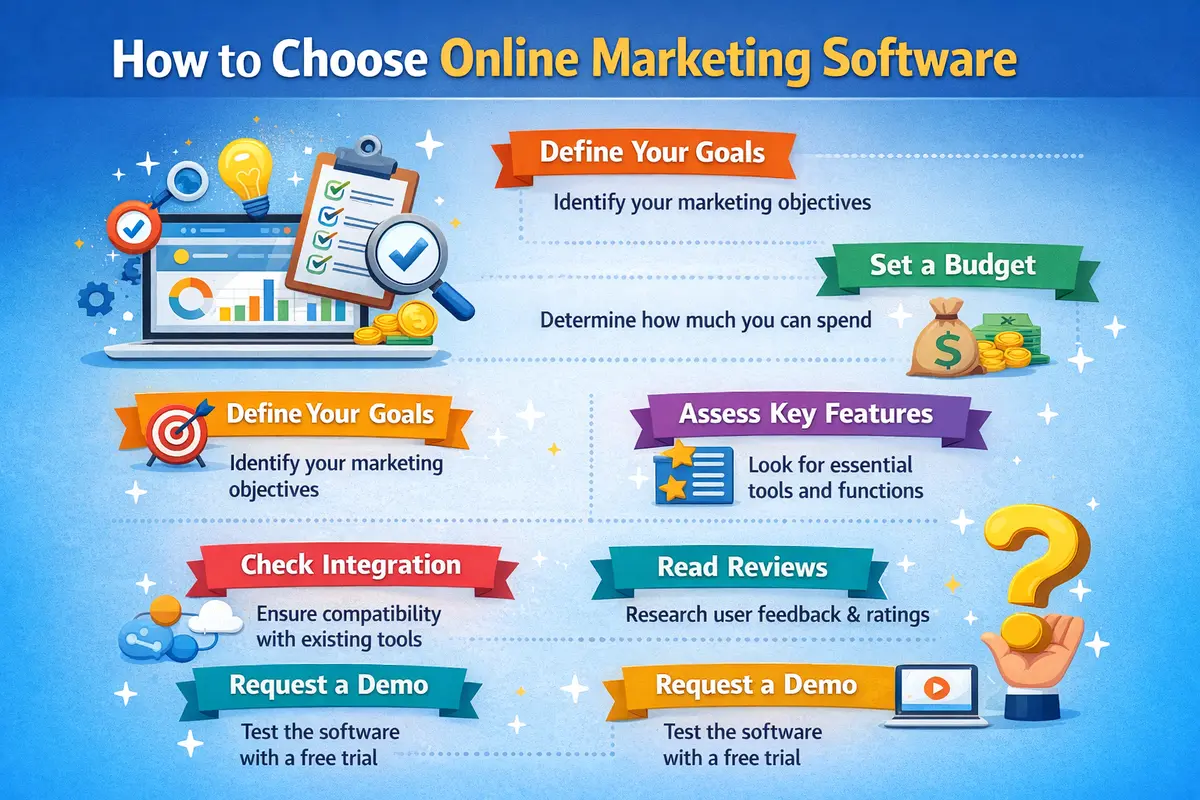
How to Choose online marketing software, Choosing the right marketing software can have a major impact on how efficiently a business grows online. With so many tools available, businesses often struggle to decide which platform fits their needs, budget, and long-term goals. Selecting the wrong software can lead to wasted time, unnecessary costs, and poor results.
This guide explains how to choose the right online marketing software by focusing on practical factors such as goals, features, ease of use, and scalability. It is designed to help businesses make informed decisions without getting overwhelmed by technical details.
What Is Online Marketing Software?
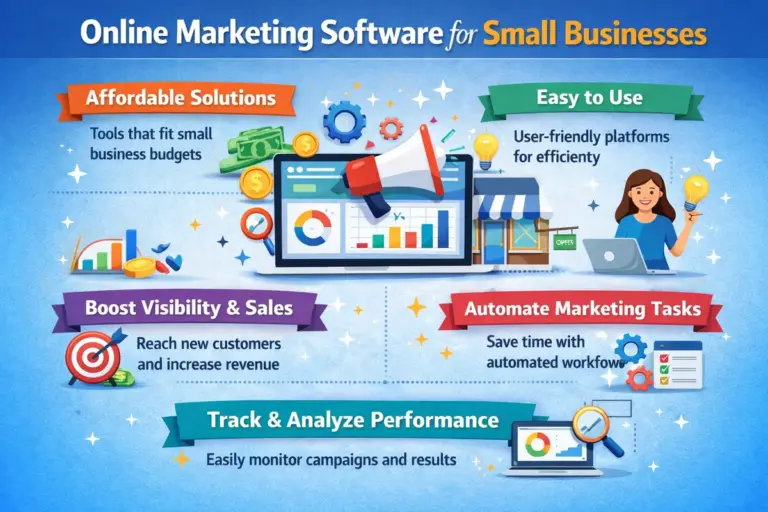
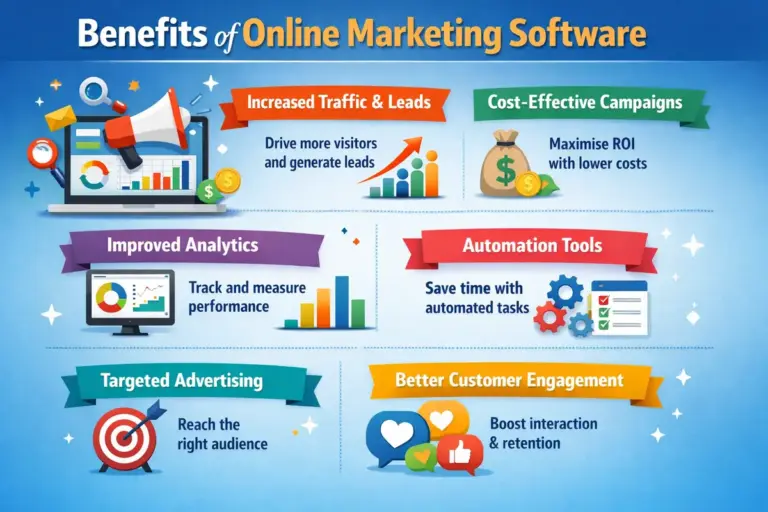
Online marketing software refers to digital tools that help businesses plan, manage, automate, and measure marketing activities online. These tools support tasks such as email marketing, lead management, analytics, customer engagement, and campaign automation.
Understanding what online marketing software is and how it works makes it easier to evaluate different options and select a platform that aligns with business objectives.
Understanding what online marketing software is and how it works
helps businesses evaluate tools more effectively.
Start With Clear Business Goals
The first step in choosing online marketing software is defining clear goals. Businesses should identify what they want to achieve before comparing tools.
Common goals include:
- Generating more leads
- Improving email engagement
- Automating follow-ups
- Tracking campaign performance
- Increasing conversions
When goals are clear, it becomes easier to filter out tools that do not support those objectives.
Identify Essential Features
Not all online marketing software offers the same features. Businesses should focus on essential functionality rather than advanced options they may not need immediately.
Key features to consider include:
- Email marketing and automation
- Lead capture forms and landing pages
- Analytics and reporting
- Customer segmentation
- Integration with existing tools
Choosing software with the right core features helps avoid unnecessary complexity.
Consider Ease of Use
Ease of use is especially important for beginners and small teams. Complex dashboards and steep learning curves can slow progress and reduce adoption.
When evaluating tools, businesses should look for:
- Intuitive interfaces
- Guided setup or onboarding
- Clear documentation and tutorials
- Responsive customer support
User-friendly software increases productivity and reduces frustration.
Evaluate Scalability and Flexibility

Online marketing needs change as businesses grow. The right software should be able to scale without requiring frequent migrations.
Scalability considerations include:
- Ability to handle more contacts and campaigns
- Flexible pricing plans
- Advanced features available when needed
- Support for team collaboration
Choosing scalable software ensures long-term value.
Check Integration Capabilities
Marketing software rarely works alone. Integration with other tools is essential for smooth workflows.
Businesses should check whether the software integrates with:
- Websites and content management systems
- CRM platforms
- Payment processors
- Analytics tools
- Third-party applications
Strong integration capabilities reduce manual work and improve data accuracy.
Compare Pricing and Value
Pricing varies widely across online marketing software platforms. Businesses should compare not only cost but also value.
Important pricing factors include:
- Monthly or annual subscription fees
- Feature limits at each pricing tier
- Additional costs for contacts or automation
- Availability of free trials or demos
The goal is to find software that delivers value relative to business needs, not just the cheapest option.
Assess Support and Learning Resources
Reliable support can make a significant difference when issues arise. Businesses should evaluate the level of support offered by software providers.
Helpful resources include:
- Knowledge bases and documentation
- Video tutorials and guides
- Community forums
- Live chat or email support
Good support reduces downtime and speeds up problem resolution.
Avoid Common Mistakes When Choosing Software
Businesses often make mistakes when selecting online marketing software. Being aware of these can prevent poor decisions.
Common mistakes include:
- Choosing software based on popularity alone
- Overpaying for unused features
- Ignoring long-term scalability
- Failing to test software before committing
Avoiding these pitfalls leads to better outcomes.
Test Before Making a Final Decision
Whenever possible, businesses should test software before purchasing. Free trials and demos provide valuable insights into usability and performance.
Testing helps businesses:
- Understand workflows
- Evaluate ease of use
- Confirm feature relevance
- Identify potential limitations
Hands-on experience often reveals more than feature lists.
Align Software With Your Marketing Strategy
The right online marketing software should support the overall marketing strategy. Tools should fit seamlessly into existing processes rather than forcing major changes.
When software aligns with strategy, businesses can implement campaigns more effectively and measure success accurately.
According to HubSpot, marketing software helps businesses manage campaigns,
automation, and performance tracking more efficiently.
Frequently Asked Questions
Is it better to choose an all-in-one platform?
All-in-one platforms are often ideal for beginners and small businesses, while larger organizations may prefer specialized tools.
How important is automation when choosing software?
Automation is essential for saving time and maintaining consistency, especially as marketing efforts scale.
Can businesses switch software later?
Yes, but switching can be time-consuming. Choosing scalable software from the start reduces the need for migration.
Should pricing be the main deciding factor?
No. Value, features, and usability are often more important than price alone.
Conclusion
Choosing the right online marketing software requires careful consideration of goals, features, usability, and scalability. By focusing on practical requirements rather than hype, businesses can select tools that support long-term growth and efficiency.
With the right software in place, businesses can automate tasks, gain actionable insights, and build stronger customer relationships. Making a thoughtful choice today helps avoid costly changes in the future.